At Bahia, where Bracell produces special soluble cellulose and dissolving pulp, what defines operation is not simply how much pulp is produced, but the standard upheld, day after day.
For Rudine Antes, that standard starts with a simple principle: safety comes first.
“When you talk about Bracell Bahia, what we’re talking about is quality grounded in safe practices. Quality is more important than the amount of pulp that you produce.”
In Rudine’s view, safety and quality are filters through which decisions are made, shaping how targets are set, how trade-offs are weighed, and how performance is evaluated. Holding true to the operating guidelines of SQPC – Safety, Quality, Productivity, and Cost, rather than treating safety as a downstream checkpoint, he sees it as the condition that defines what is acceptable in the first place.
Together, these priorities create the operating boundaries within which Bracell Bahia functions. They also explain Rudine’s approach to leadership at scale: where decisions are made within clear limits, and success is judged by consistency and standards.
Why people, not technology, create advantage
If safety and quality set the boundaries for how Bracell Bahia operates, Rudine is equally clear about what allows the organisation to perform within those limits, especially when the pressure is on.
For him, while the tools and systems matter, they are rarely the true differentiator. In a sector where technology can be bought, installed, and replicated, Rudine believes advantage comes down to something far harder to standardise: the people who show up to run the operation, solve problems, and hold the line on standards.
“I think that the main areas that we keep competitive is still our people.”
Rudine doesn’t frame this as an abstract belief. He describes it as something that shows up in the way the organisation functions day to day, in the expectations people hold of one another, and in the habits that shape decisions when trade-offs appear. Values such as integrity, customer focus, and continuous improvement are not treated as slogans, but as shared discipline, and they are the behaviours that determine whether standards are applied consistently, even when it would be easier to compromise.
He also highlights the diversity within Bracell Bahia as a practical strength. In an industrial environment where adaptability and problem-solving are essential, different backgrounds and experiences broaden the way teams see risk, respond to complexity, and find solutions under pressure.
“We have a lot of diversity. It means that you have people from several different areas, from several different cultures, with several backgrounds. This actually is a key factor for the success of the organisation.”
For Rudine, these human factors are not a “soft” layer on top of performance. They are what make performance possible, enabling Bracell Bahia to operate at scale while staying anchored to the priorities set at the outset.
From the lab to the mill and learning to lead at scale
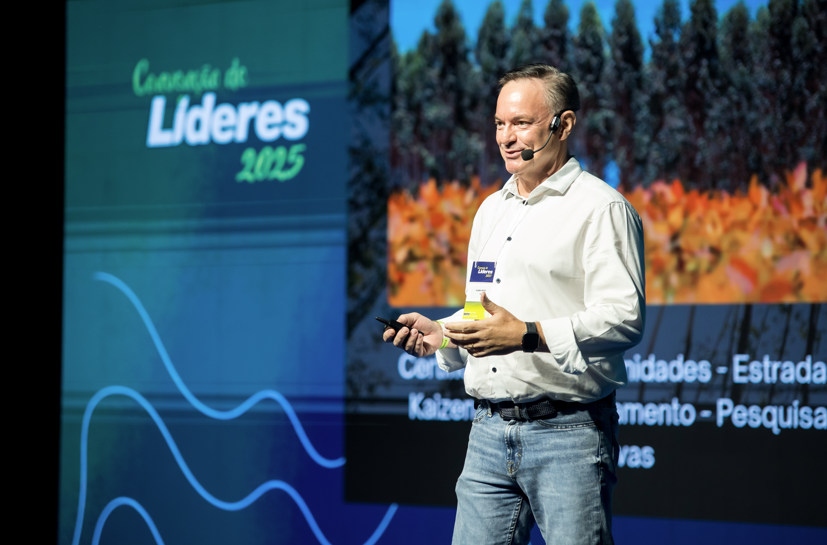
Rudine To Rudine Antes, Managing Director of Bracell Bahia, the human factor is the key to the success of the organisation.
Rudine traces his leadership approach to an unusual career path that spans both research and operations, a combination that shaped not just what he knows, but how he thinks.
He describes his early training as discipline in depth: learning to stay with a problem long enough to reach the detail that actually changes outcomes. That mindset, he says, comes directly from research.
“When you go for a PhD level, you cannot go if you are not able to go deep in one subject to the minimum details…you start to learn how to ask why many times to be sure that things are on the right track.”
But the lesson didn’t stay in the lab. Over time, Rudine learnt how to translate technical depth into practical, day-to-day problem solving on the ground, where decisions are made quickly, trade-offs are real, and results are visible.
That balance between innovation and operational reality remains central to how he leads. Having worked across Brazil, Chile, Indonesia, and now back in Bahia, he also highlights the need to adapt across cultures without losing the core values that make teams work: respect, engagement, and motivation, especially in an organisation operating at scale.
Equality, presence, and shared leadership
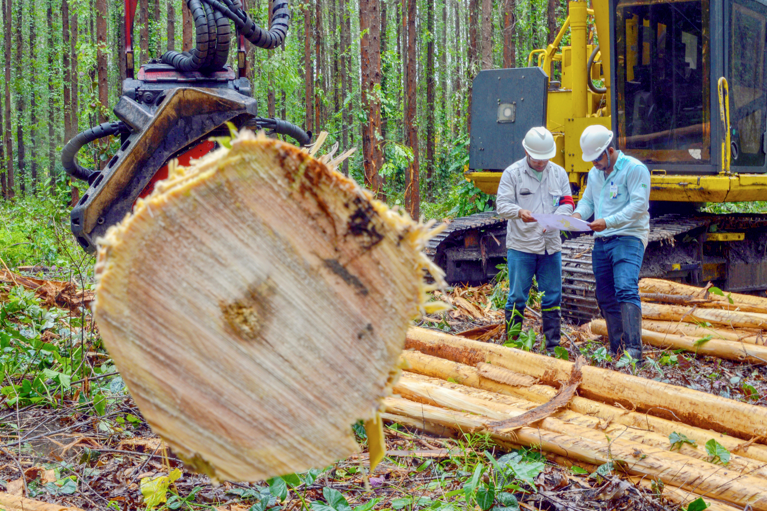
Rudine’s management philosophy brings him to the front lines, visiting mills and forests to understand the needs and processes on the ground.
If Rudine’s background taught him how to think, his day-to-day leadership is defined by how he shows up. At the centre of his approach is a clear belief about people and hierarchy; particularly in large operations where it’s easy for distance to grow between levels.
“First of all, we are human beings. Everybody is equal. They have to be treated like this. There is no strong hierarchy behaviour.”
For Rudine, leadership is something practised visibly and consistently, including by joining his team to observe the way they work, actively contributing to the process. He sees this as a way to learn, to stay close to reality, and to appreciate the work his team is doing.
“I go a lot to the mill, and I go a lot to the forest. I think that the key message is that first of all, people can see that I want to learn. It also helps them to see that if the Managing Director is here, it is because what they do is important.”
He draws a sharp line between managing and leading. Systems and processes can be managed; people cannot; they have to be led, with clarity and example.
“When we talk about tools and systems, we manage. When we talk about people, we lead.”
Ultimately, Rudine’s view of leadership is collective rather than individual. Using the metaphor of birds flying in a V-formation, he describes leadership as shared, rotating, and focused on helping the group go further together, not solely on the vision of any one person.
“A good leader has to be able to take people to places that they don’t think they can reach by themselves. Secondly, good leadership is seen when you have the team working so well that at the end of the day, you do not know who the leader is, because everybody has contributed meaningfully.”
Continuity, capability, and long-term responsibility

Bracell’s 2030 commitments are rooted in RGE’s 5Cs philosophy: to do good for the community, country, climate, customer, and only then will it be good for the company.
When Rudine talks about the future, he doesn’t frame it as expansion for its own sake, or as a short-term ambition to chase what’s next. Instead, he returns to the idea of continuity: the discipline of staying present, delivering consistently, and building capability that holds up over time.
That long-term responsibility is anchored in a clear framework. He points explicitly to Bracell 2030 as the reference point for Bracell’s commitments, and as the way of planning and measuring what the organisation is responsible for now.
In Rudine’s eyes, the emphasis is less on announcing new initiatives and more on follow-through: meeting the targets already set, proving progress through measurement, and keeping standards consistent year after year.
Responsibility, he argues, is inseparable from the reality of being an employer and an operator with a long-term presence. It is not something reserved for strategy decks. It sits alongside daily operations, shaping how priorities are set, how performance is evaluated, and how decisions are made with the next decade in mind.
For him, that is what continuity ultimately means: sustained delivery and the organisational capability to keep doing the right things long after the attention moves on.
“The roadmap is something we work on every year, and we use it to check if we’re going in the right direction. If we’re not going in the right direction, we course correct. The team is very committed to reaching our goals together.”
Learn more about Bracell’s long-term responsibility framework: Bracell 2030