The direction of the Woodfibre LNG project was clear when Luke Schauerte stepped into the CEO role in 2024. The company had made early, defining decisions about where to focus its efforts: embedding emissions reduction, electrification, and environmental performance into the core design of the facility.
“When I looked down the coastline and saw Woodfibre LNG, I always saw a company that was trying to set a higher bar.”
Woodfibre LNG had positioned itself differently from the outset. Its commitment to becoming the world’s first net-zero LNG export facility – powered by renewable electricity and designed to eliminate operational emissions – was not an incremental ambition. It was a foundational business decision that shaped engineering, execution, and stakeholder expectations from day one.
Those early choices set the parameters for how the project would be developed. Rather than retrofitting sustainability into a conventional LNG model, Woodfibre LNG integrated it into the base case, accepting the added complexity, considerations, and delivery challenges that come with doing so.
Managing trade-offs in a high-commitment project
Projects with ambitious environmental and social benchmarks tend to operate within more defined constraints. Commitments made to regulators, the Squamish Nation, and the local community establish clear expectations around delivery, performance, and accountability.
Environmental performance, schedule, and cost are not treated as sequential priorities but as interdependent variables that must be evaluated together. “You can’t trade off the environmental,” says Luke. “You have to prove that you’re going to protect it, but you also have to figure out how to do that in a way that is timely and cost effective.”
This integrated approach is particularly important given the project’s net-zero ambition. Delivering a fully electric LNG facility while maintaining competitiveness and schedule discipline requires continuous optimisation across design, procurement, and construction. The challenge is not whether to meet environmental commitments, but how to do so while ensuring the project remains viable and deliverable at scale.
Embedding partnership into project execution
A defining feature of the project is its relationship with the Squamish Nation, which is embedded directly into how Woodfibre LNG is governed and operated. Rather than a conventional stakeholder model, the partnership functions as an integrated framework that shapes decision-making and oversight throughout the project.
The Squamish Nation is recognised not only as a rights holder, but also as a regulator and active partner. This creates a governance structure that ensures environmental and cultural considerations are continuously incorporated into project execution, not treated as external requirements to be met at specific checkpoints.
This requires a different mindset of patience before momentum. Relationships come before execution, and trust must be built deliberately over time. “You have to show up. You have to spend the time. You have to build the relationships before you start talking about projects,” shares Luke.
The partnership is formalised through agreements that set out clear expectations on environmental protection, monitoring, and transparency. One of the most visible elements is the presence of Squamish Nation environmental observers on site, providing continuous environmental oversight and direct participation in day-to-day site operations. Their role ensures that commitments are consistently validated and actively upheld in real time, rather than reviewed after the fact.
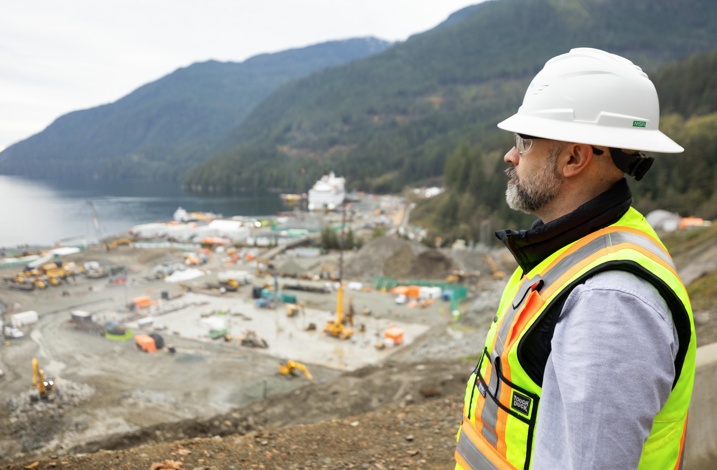
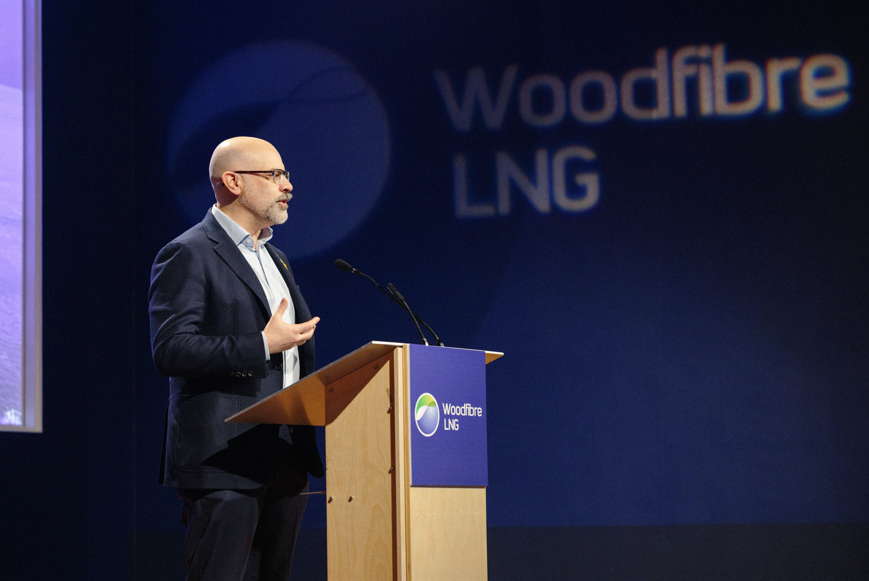
As CEO of Woodfibre LNG, Luke takes care to balance environmental and community commitments with operational delivery.
Defining success beyond first production
As the world’s first net-zero LNG export facility, Woodfibre LNG will be evaluated not just on its output, but on its ability to demonstrate that low-emissions LNG production is commercially and operationally viable.
This places greater emphasis on measurable performance: emissions reductions, reliability of electrified systems, and transparency in reporting over time. It also positions the project within the broader energy trilemma: balancing security, affordability, and sustainability, and meeting them together in a way that holds up over time.
Luke frames success at Woodfibre LNG as extending well beyond output or short-term delivery. The project is being developed amidst increasing focus on how energy is produced, particularly in relation to emissions intensity and long-term sustainability.
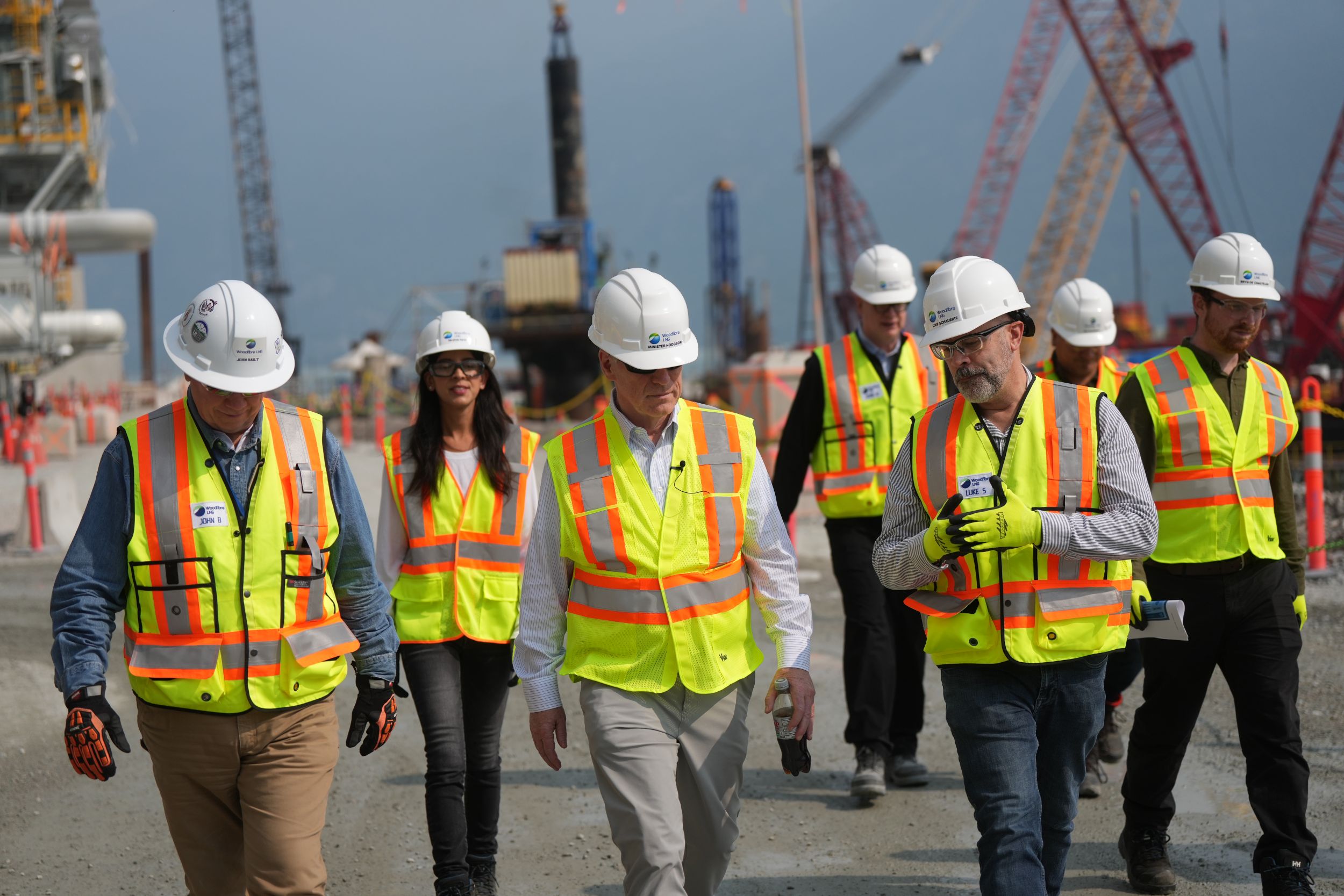
Luke leads a team focused on commitments, both in the present, and to uphold them in the future during operations.
Accountability as the operating principle
Woodfibre LNG has drawn attention for the decisions it made early in its development, particularly around electrification, emissions, and its partnership with Indigenous stakeholders. As the project progresses, those decisions continue to set the standard against which it is delivered and assessed.
For Luke, the challenge is less about setting direction, and more about maintaining discipline: ensuring that early intentions translate into measurable outcomes through construction and into operations.
He views the project’s trajectory through that lens of follow-through. Delivering a net-zero facility, maintaining credibility with partners and communities, and remaining competitive in a changing energy market are not separate objectives, but interlinked requirements that must be met together. This is where accountability becomes the defining principle. It is reflected in how decisions are made, and how performance is measured over time.
Luke concludes, “To succeed, we have to be a good neighbour; a safe and reliable operator; a steward of Howe Sound. In the end, we have to be someone who do what we say we will do, do it in a good way, and be part of that community.”
Learn more about the progress of Woodfibre LNG: Two Major Modules in Seven Days Push Woodfibre LNG to 65% Completion | Woodfibre LNG