Forests and freshwater ecosystems are often treated as mere background in industrial growth. Yet for companies whose operations depend on them, they are the foundation of long-term sustainability. For Ben Huang, Senior Sustainability Manager at Sateri, this connection is also personal.
He has seen first-hand how China’s largest freshwater lake, Poyang, underpins both biodiversity and community livelihoods, and how the company’s presence in the region makes conservation a shared responsibility.
A Personal Connection to Poyang Lake
Ben’s connection to the Poyang Lake ecosystem is both professional and personal. “Our first mill was launched near the lake and much of our viscose production is based in Jiangxi Province, where the lake is located.” That proximity has shaped both his outlook and Sateri’s actions. “It’s our responsibility to protect the lake, and also an opportunity to contribute to its restoration.”
Beyond the professional link, the lake holds deeper meaning for him, in part because of the inspirational moments he witnessed while on the lake. “Poyang Lake represents a place where nature’s quiet majesty and human purpose intersect. One moment that left a lasting impression was a few years ago, during a field visit I led with the Sateri team. As the sun was setting over the lake, we saw a Yangtze finless porpoise briefly surface in the calm water. That simple, quiet moment reminded me that conservation is not just about science or data, but about moments of connection that move people to care.”
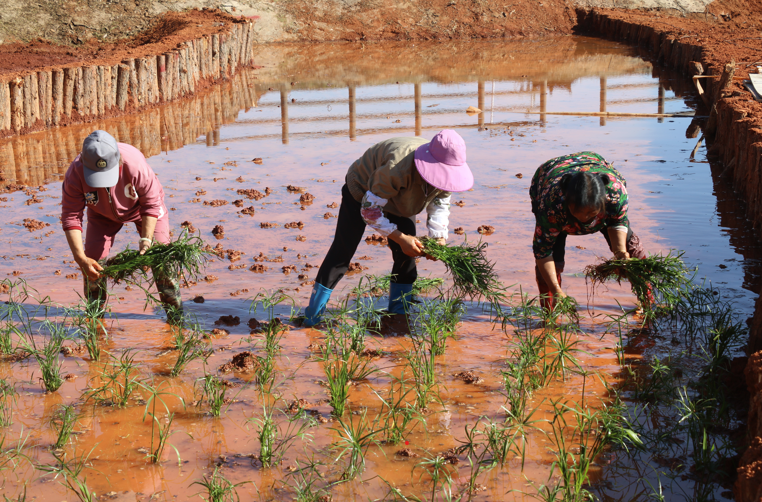
Villagers from surrounding communities engage in wetland construction around Poyang Lake.
Linking Landscape Restoration to Company Goals
For Ben, Poyang Lake is directly tied to Sateri’s production footprint. “We draw water from, and discharge treated water back to, the basin, so we focus on water stewardship in our mills and also help surrounding communities treat domestic sewage. That means careful monitoring of water use, investing in treatment facilities, and ensuring that all water discharged meets strict environmental standards before it returns to the ecosystem.” Several of the company’s mills rely on this shared ecosystem, making responsible water management a priority at both operational and community levels.
This approach is reflected through tangible actions around the basin. Sateri has supported the construction of small treatment ponds and introduced nature-based wastewater systems, mirroring the same water stewardship principles applied throughout its mills.
Employee involvement is also an essential part of the picture. Every year, employee volunteers from our mill participate in riverbank clean-ups, while an education centre near the mills hosts school groups, giving local students first-hand experiences of the region’s biodiversity and the importance of freshwater ecosystems.
The company also proudly showcases the lake to partners from across its value chain. “Local experts introduce the indigenous finless porpoise and migratory bird populations, and visitors can observe seasonal habitats to better understand their own water and biodiversity footprint and subsequent impact.” These shared on-the-ground experiences strengthen relationships with stakeholders and encourage collective action for long-term conservation.
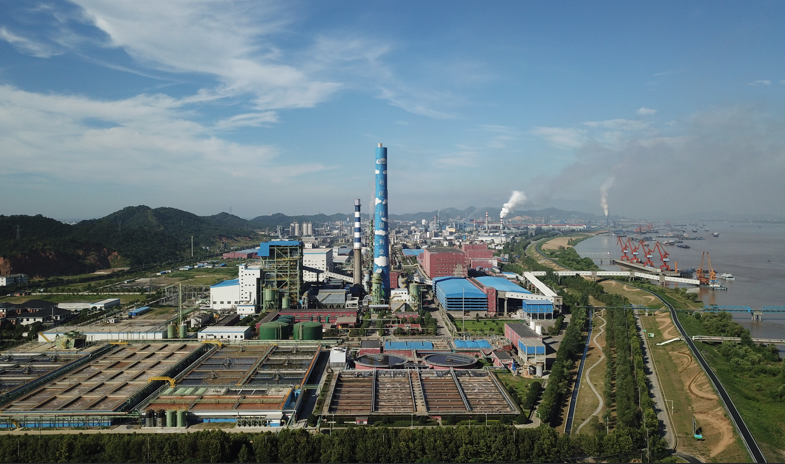
Sateri’s mills embed circularity into the production process, developing products with up to 50 percent recycled content.
Milestones in Sateri’s Sustainability Transformation
Sateri’s sustainability transformation is marked by clear milestones in both manufacturing and sourcing. “All six viscose mills have been verified against the EU Best Available Techniques (BAT) reference, and five viscose mills have achieved the aspirational level of the Zero Discharge of Hazardous Chemicals (ZDHC’s) Manmade Cellulose Fibre Guidelines in 2024.”
On the sourcing front, the company has made measurable progress. Over the past five years, more than 96 percent of pulp has come from sustainable and controlled sources, with ongoing efforts continuing to close the remaining gap. “We conduct regular assessment on pulp suppliers, check origin, review commitments to sustainable forest management, and use international recognized standards.”
Sateri has embedded circularity into its fibre portfolio, developing products with up to 50 percent recycled content from post-consumer textile waste, verified to the Recycled Claim Standard (RCS) under Textile Exchange. “We’re showing that fibre production can evolve without compromising performance,” Ben said. “Our recycled-content fibres now incorporate up to 50 percent post-consumer textile waste, and we’re working to scale this across production.”
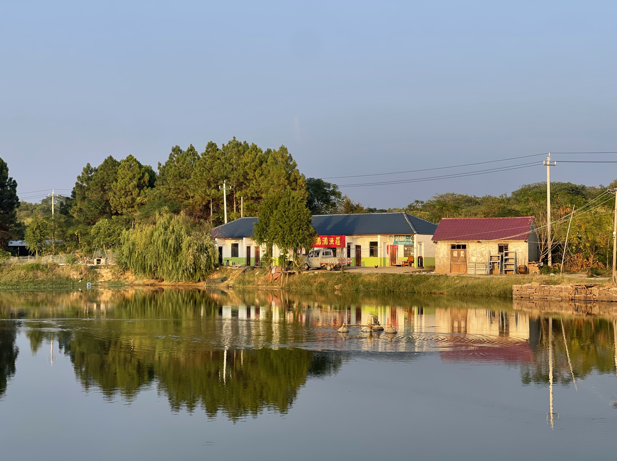
Sateri works with surrounding communities to develop alternative livelihoods such as hospitality.
Integrating Social and Economic Impact
Sustainability at Sateri is not solely defined though an environmental lens. Social and economic impact are equally valued. Ben emphasises how conservation and livelihoods must go hand in hand. “We have also worked with nearby communities on alternative livelihoods – developing ‘ecological economy’ options such as bird-watching guiding and basic hospitality infrastructure so that conservation and local income go hand in hand.”
He recalls meeting a former fisherman, now a community ranger and nature educator, whose story left a strong impression. “He used to fish here for a living, but over time, he shifted his thinking from taking from the lake, to protecting the lake. As we walked along the shoreline, he shared stories of how his daily routine had changed – from setting nets to setting up birdwatching points, from tracking fish to tracking waterbirds. What moved me the most was the pride in his voice when he spoke about the lake – not just as a resource, but as a home worth passing on to his children.
Sateri has also produced a book on Poyang Lake for local schools, aiming to connect biodiversity with environmental education for younger generations. For Ben, investing in education is essential to long-term sustainability; it helps instill environmental awareness early on, ensuring future generations are equipped to carry forward conservation efforts.
Looking Ahead: Innovation and Landscape Stewardship
When Ben thinks about the future of responsible man-made cellulosic fibre (MMCF) production, he sees innovation and landscape stewardship working together. “We are expanding lyocell as a cleaner, closed-loop next-generation fibre, while continuing to improve viscose performance.”
Reducing emissions is also a priority. “We are also investing in cleaner energy. For example, we are launching a bioenergy project at our Shandong mill to replace coal.” Sateri has also installed solar panels across several of its existing mills, contributing to a gradual shift towards renewable power across its operations. By shifting to renewables and cleaner technologies, Sateri is positioning itself to lower its footprint while strengthening its competitiveness.
On the conservation side, Ben highlights Sateri’s ongoing collaboration with Conservation International through the Poyang Lake Ecosystem Restoration Initiative, now in its third phase. The partnership focuses on protecting and restoring freshwater and wetland ecosystems, expanding the conservation area, and strengthening biodiversity protection within the lake basin. This work supports both community livelihoods and ecosystem resilience – from improving wetland management to building artificial wetlands that help treat agricultural and domestic wastewater. For Ben, this combination of fibre innovation and landscape restoration captures how sustainability gains real traction: through continuous improvement, collaboration, and a shared commitment to protecting the landscapes that sustain both nature and people.
Partnerships as a Force Multiplier
Partnerships remain critical in turning commitments into lasting impact. “We have co-run consumer and education activities with partners and media and have encouraged more stakeholders to support collective action around the lake.”
Beyond Poyang Lake, Sateri works actively with industry platforms like the ZDHC and independent certification systems, pushing for higher standards across sourcing, manufacturing, and recycling.
Ben believes such partnerships are vital because they build shared responsibility. “We don’t have to choose between people and the planet. What we need are better ways for both to thrive together.” Collaboration, he adds, “creates the collective momentum needed to solve challenges that no single organisation can tackle alone.”
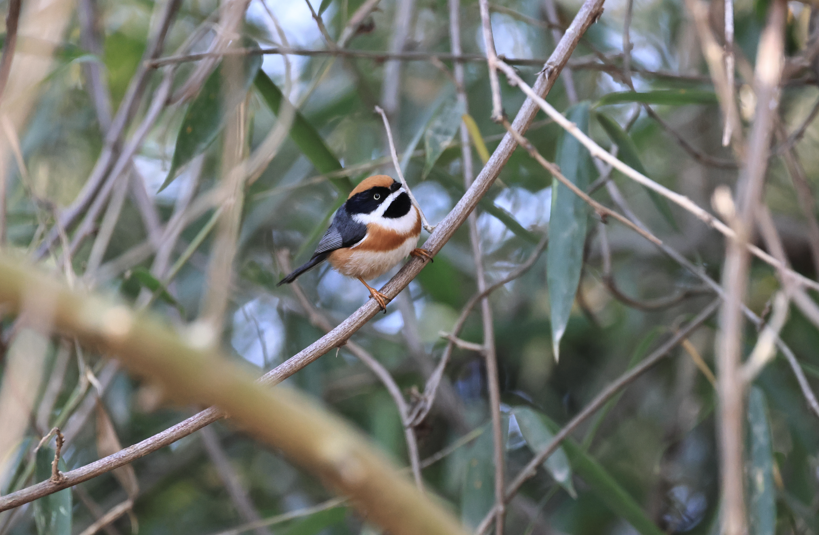
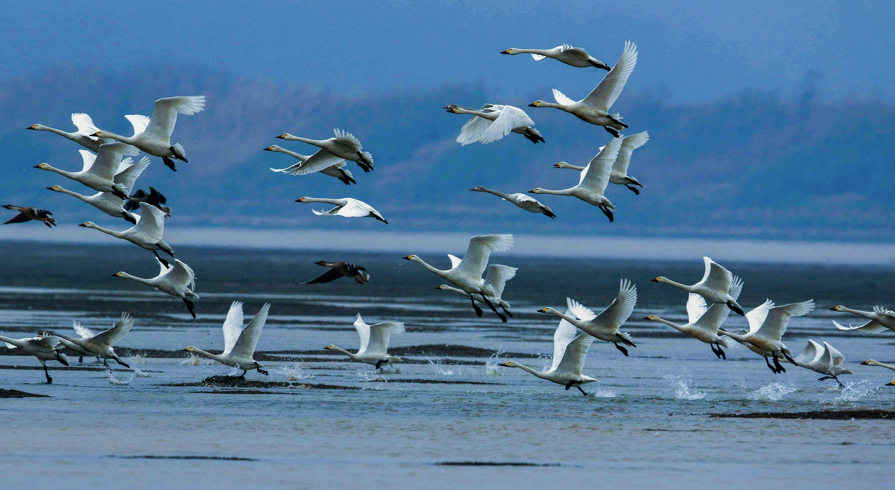
Poyang Lake is home to many species of migratory birds, and bird-watch guiding is one of the alternative livelihoods Sateri is helping to develop within the community.
Why It Matters
All of these efforts link back to Sateri’s Vision 2030, which includes the goal to “contribute to a net positive state of nature through supporting the protection, restoration and regeneration of the land and freshwater ecosystems across our value chain footprint.”
For Ben, this ambition is both a responsibility and a source of inspiration. “Poyang Lake is not just a place for wildlife, it’s a place for people too. It provides water, food, jobs, and a sense of identity for the communities who’ve lived around it for generations. When we protect the lake, we’re also protecting a way of life.”
If a friend or family member were to visit the lake, Ben would recommend experiencing it in winter, when “hundreds of thousands of migratory birds, especially the graceful and endangered Siberian cranes, fill the sky.” But beyond the wildlife, he hopes visitors will take time to meet local fishermen or rangers. “Their stories about the seasons, the lake, and how life has changed – bring a human dimension that no guidebook can offer. Poyang Lake isn’t just something to see, it’s something to feel and connect with.”
Learn more about the Poyang Lake Ecosystem Restoration Initiative.