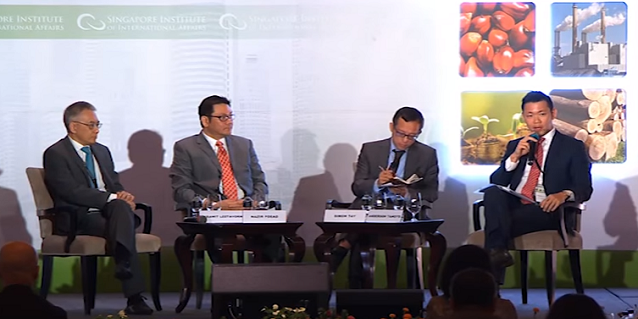
At the recent Food Tech Summit in Dubai, held alongside the Gulfood Manufacturing event, industry leaders came together to discuss one of the most pressing questions in the food industry today: how to feed a fast-paced, growing world without compromising on flavour, nutrition or sustainability.
As Head of Functional Fats at Apical, Edmund Zheng shared his perspective on how palm oil and food science can help shape a more circular and sustainable food cycle.
Palm Oil’s Evolving Role
Palm oil remains one of the world’s most widely used ingredients, found in everything from bakery products and confectionery to frying oils and dairy alternatives. Edmund highlighted why it is so central to the global food system.
“One of the reasons that it is widely used is because of its scalability and availability,” he explained. Palm oil is the most efficient vegetable oil crop, accounting for more than 35% of global oils and fats produced, while using only about 10% of the land attributed to cultivating edible oil globally.
“With palm oil, we can use less land to produce more,” Edmund summarised. “To continue feeding the growing consumer demand with limited land, the solution is not to plant more, but to innovate and be more efficient with what we have.”
This is where Apical’s shift from a pure agricultural commodity player to an application-focused partner comes in. Moving downstream, Apical is expanding focus to application know-how and functional fat solutions that can be tailored to specific uses in bakery, chocolate, confectionery and frying.
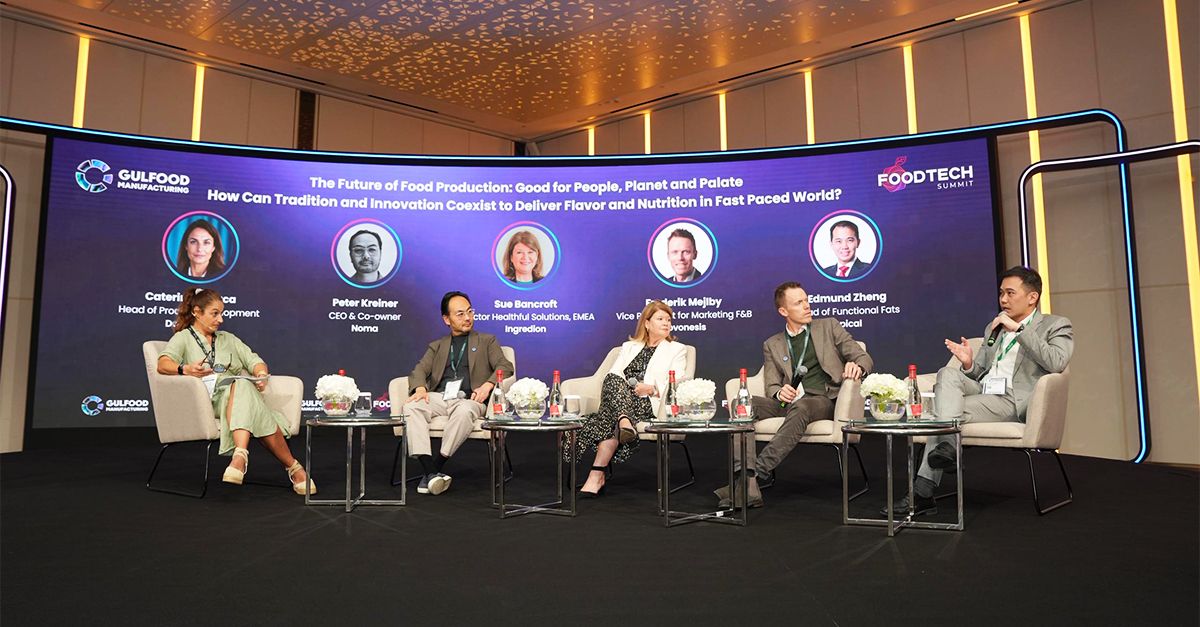
Edmund Zheng, Head of Functional Fats at Apical, shares his perspective on how palm oil and food science can help shape a more circular food economy at the Gulfood Manufacturing panel.
Innovation that Protects, Not Replaces, Tradition
One misconception in modern food production is that industrial scale means losing authenticity.
“We believe technology can be used to preserve tradition. Producing at industrial scale does not mean losing artisanal soul,” he shared.
At the Apical Innovation Centre (AIC) in Jakarta, Edmund and his team invites chefs and R&D teams to co-create. Together they explore new solutions, optimise formulations and tailor recipes that respect local flavours and culinary heritage.
“Innovation does not mean we are sacrificing craftsmanship,” Edmund added, “in fact, innovation complements it.”
This co-development approach ensures that functional fats and other ingredients are not designed in isolation, but closely align with the needs of the food and beverage industry and consumer preferences across different cultures.
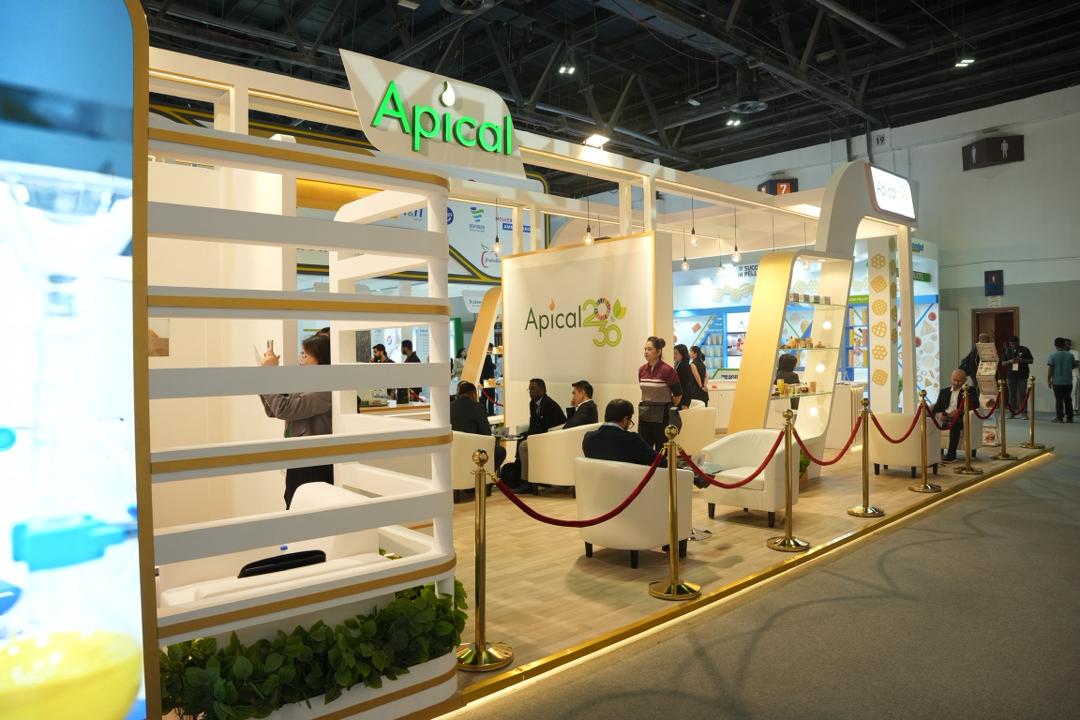
Apical’s booth at the Food Tech Summit, Dubai, where the team showcases latest technologies in food science, and the high adaptability of edible oil.
Aligning Indulgence with Sustainability
Taste and texture remain non-negotiable for consumers, but expectations are rising. People now want reassurance that what they enjoy is also responsibly produced.
“We believe that today’s consumers do not just want to feel good about what they eat, they want to trust it. That is why transparency is imperative,” Edmund noted.
In palm oil, sustainability is guided by international standards such as the RSPO (Roundtable on Sustainable Palm Oil). A critical part of this is traceability, or knowing where the oil comes from. This is complex, given the fragmented nature of many agricultural supply chains, but Apical is using technology to close the gap.
The company applies GIS (Geographic Information System) tools and satellite monitoring across its supply chain to track sourcing locations and monitor for potential deforestation. “Today, we have achieved 99.8% of traceability to the plantation level,” Edmund said, underscoring how data and technology help strengthen trust.
Sustainability, however, is more than just compliance. Edmund described it as a driver of innovation. Palm oil production can support a circular economy, where every part of the crop is utilised:
- At Asian Agri – long-term Apical supplier and sister company within the RGE group – empty fruit bunches are used as fertilisers in the field after oil extraction;
- Mill effluent, which releases methane, are treated in biogas plants that capture the gas and generate electricity. This power supports both Asian Agri’s operations and nearby communities.
These efforts sit under Apical2030, a long-term sustainability commitment that focuses on transformative partnerships, climate action, green innovation and inclusive progress. This framework ensures that new product developments are not only good for the palate, but also good for people and the planet.

The Apical team met with industry professionals and customers at the Food Tech Summit, Dubai, discussing how chefs and R&D teams can work together to create recipes and formulas using technology.
A Versatile and Inclusive Food for the Future
Edmund is optimistic about the role palm oil can play in the years ahead.
“Palm oil may have begun as a traditional staple, but through innovation and collaboration, developing application possibilities and our sustainability commitment, it is becoming one of the most versatile and inclusive ingredients for the future of food,” he said.
By pairing high-yield crops such as palm oil with traceability technologies, a commitment to transparency, circular resource use and collaborative product development, it is possible to create foods that are indulgent and responsible.
Learn more about Apical2030 and how traceable palm oil can support sustainable and community inclusive goals: https://www.apicalgroup.com/sustainability/apical2030/