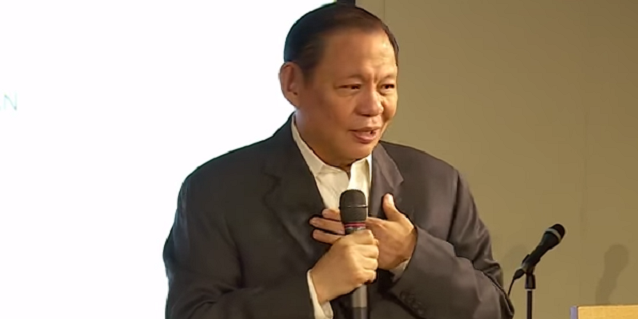
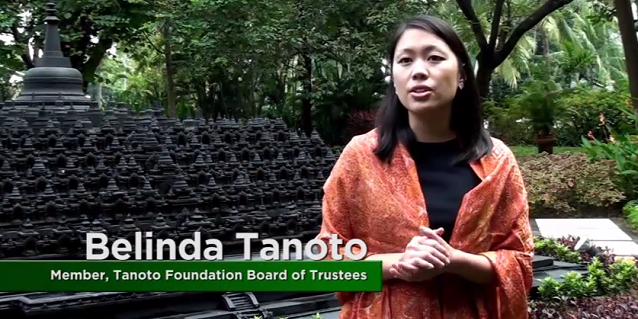
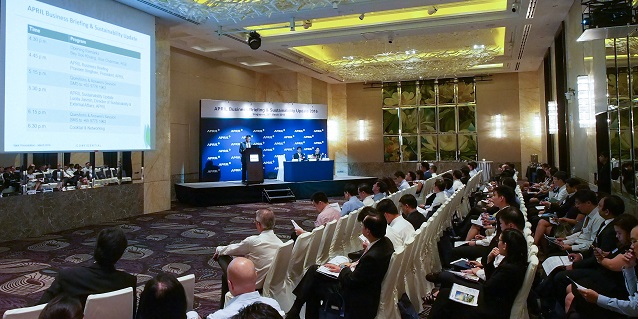
Sukanto Tanoto – An Entrepreneur’s Journey (Part 1/2)
RGE Founder and Chairman Sukanto Tanoto was the keynote speaker to a visiting group of EMBA and MBA students from the Wharton School of the University of Pennsylvania on May...
Latest updates on what's happening in RGE Group


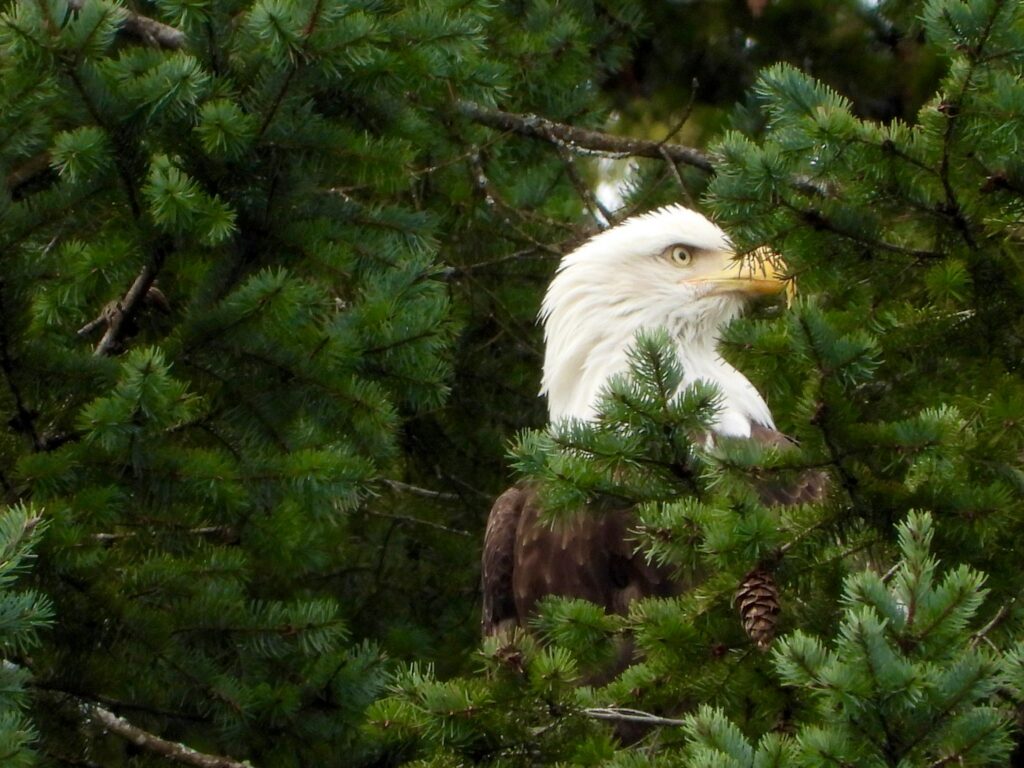
The continued return of a resident bald eagle to its nest along the shores of Átl’ḵa7tsem (Howe Sound) for a third consecutive year provides a measurable indicator that biodiversity can be maintained alongside active industrial development. Located on the former Woodfibre pulp mill site, approximately seven kilometres southwest of Squamish, this outcome reflects a structured approach to environmental management embedded within project execution.
Eagles have long inhabited this area. What differentiates current operations is the level of systematisation in how habitats are monitored, documented, and protected for the bird and wildlife species present on site.
Planning Around Environmental Constraints
At Howe Sound, construction planning is sequenced around ecological parameters. Prior to any ground disturbance, qualified specialists conduct wildlife surveys to identify active nests. Once identified, these areas are subject to defined no-disturbance buffers under a formal wildlife management programme.
For bald eagles, this includes a 100-metre vegetated buffer throughout the year, extended to a 200-metre quiet zone during breeding season. For more sensitive species, such as the western screech-owl, buffer zones are expanded even further. Operational activities from vegetation clearing to underwater activities are adjusted to comply with these constraints.
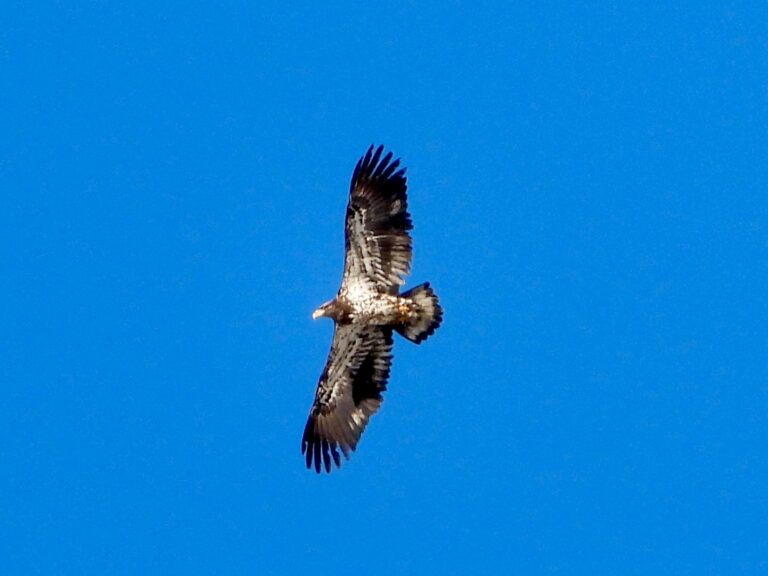
Woodfibre LNG sets up no-disturbance buffer zones under a wildlife management programme.
Habitat Management and Offsetting Measures
Where site development necessitates habitat modification, mitigation measures are implemented to maintain ecological function. This includes the installation of engineered nesting structures to support species such as barn swallows, which are classified as threatened. These structures incorporate artificial nest cups, predator guards, and ongoing monitoring protocols.
Additional measures include the installation of bat boxes in designated locations to provide roosting habitats for species such as the little brown myotis. These interventions are designed to ensure continuity of habitat availability within an altered site environment.
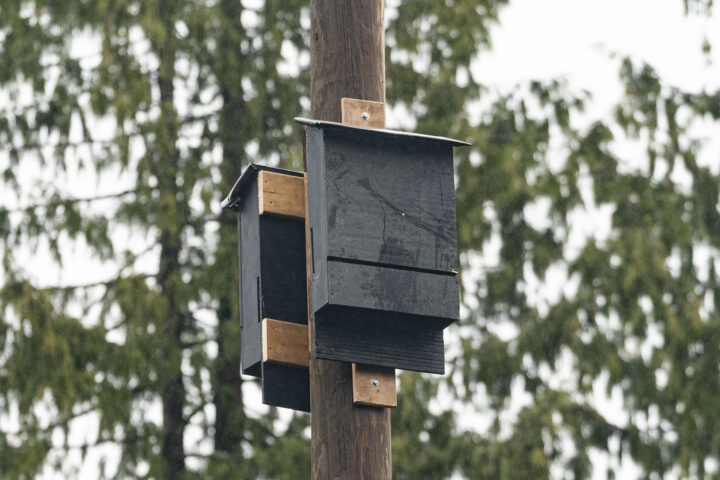
Bat boxes installed on site, designed to ensure continuity of habitat availability.
Governance and Oversight
All conservation measures are codified within a Wildlife Management and Monitoring Plan developed in consultation with Indigenous partners Sḵwx̱wú7mesh Úxwumixw (Squamish Nation) and səlilwətaɬ (Tsleil-Waututh Nation) as well as federal and provincial regulators.
Implementation is subject to oversight by the B.C. Environmental Assessment Office and Squamish Nation, with annual reporting requirements and independent verification by qualified professionals to ensure compliance and effectiveness.
A Broader RGE Approach to Conservation
This site-level approach is consistent with RGE’s wider conservation strategy across its global operations. In China, RGE supports ecosystem restoration efforts at Poyang Lake, focusing on wetland conservation and migratory bird habitats. In Indonesia, the Restorasi Ekosistem Riau (RER) programme protects and restores peatland forest landscapes, safeguarding biodiversity while contributing to climate resilience.
Across these geographies, the operating model remains consistent: integrate conservation planning into core operations, apply measurable safeguards, and ensure third-party oversight.
The continued presence of the bald eagle at Howe Sound reflects the outcomes of a structured and disciplined approach to environmental management. It demonstrates that with careful planning, defined safeguards, and consistent oversight, ecological integrity can be maintained alongside industrial development.
Learn more about how Woodfibre LNG safeguards conservation: A nest, a return, and a sign of coexistence in Átl’ḵa7tsem | Woodfibre LNG