Sustainable packaging is often discussed in terms of materials, performance, and end use. But truly sustainable packaging starts much earlier in the value chain. It starts with how raw materials are sourced, how forests are managed, and how innovation transforms fibre into high-performance products.
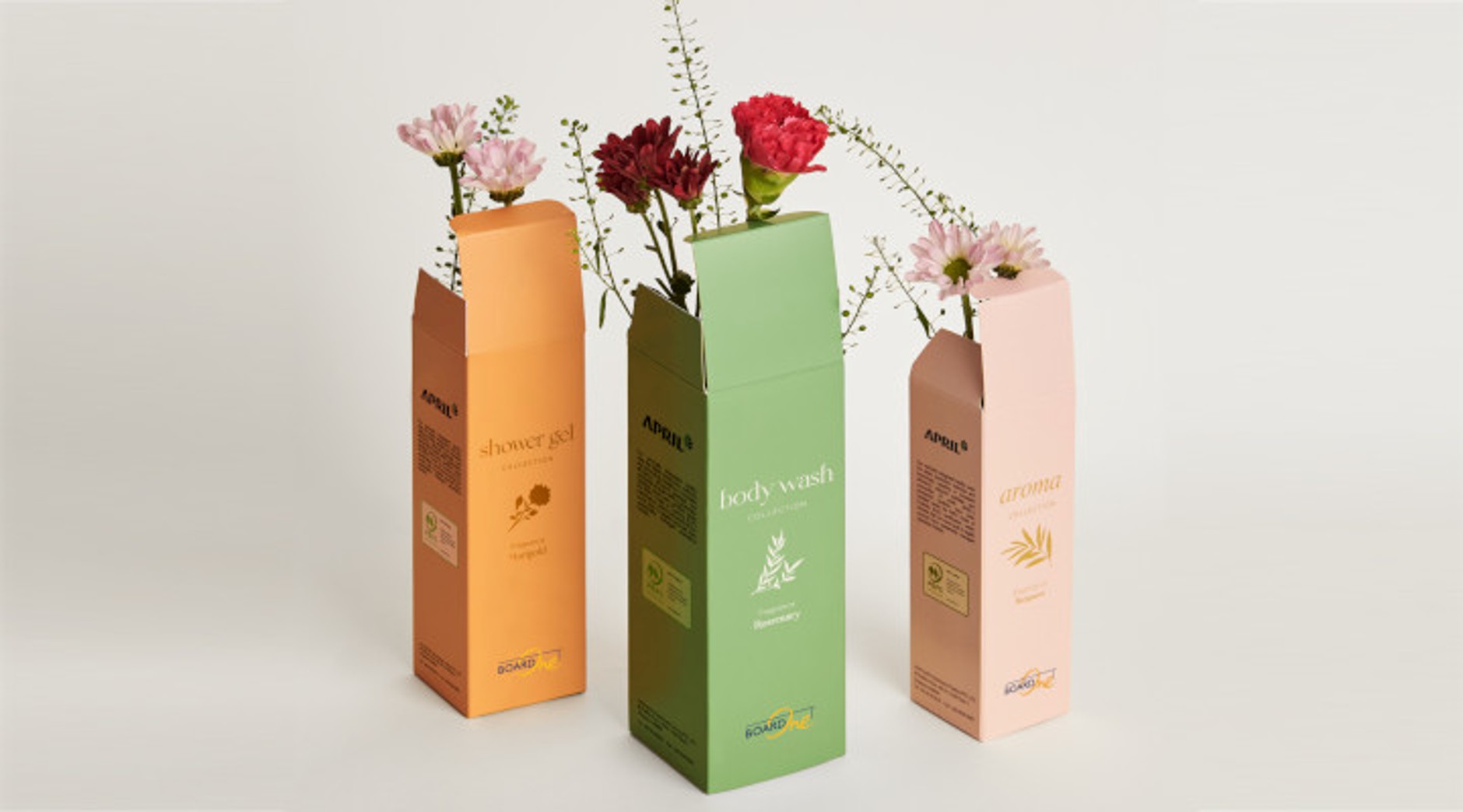
At APRIL, part of the RGE group, paperboard like BoardOne is more than a plastic replacement. It is the output of an integrated system that combines responsible forestry, traceable supply chains, and continuous material innovation. The result is a sustainable paperboard that performs as a reliable plastic alternative rather than a compromise.
What makes paperboard like BoardOne sustainable?
Sustainable paperboard starts with the raw material. BoardOne is made from wood fibres from sustainably managed plantations. This ensures that the source of the material is renewable, controlled, and aligned with long-term environmental stewardship.
Certification plays a key role in validating these practices. APRIL’s fibre is certified under the Programme for the Endorsement of Forest Certification (PEFC), a globally recognised forest-certification standard.
The certification gives assurance on three fronts:
- Environmental management – how forests, soil, and water are protected
- Social responsibility – how workers and local communities are treated
- Governance standards – how operations are documented and held accountable
Traceability strengthens this system further. APRIL can track fibre from plantation to production, allowing customers and stakeholders to understand the origin of materials and the processes behind them. Today, transparency is expected across supply chains, not just for compliance, but as a trust mechanism.
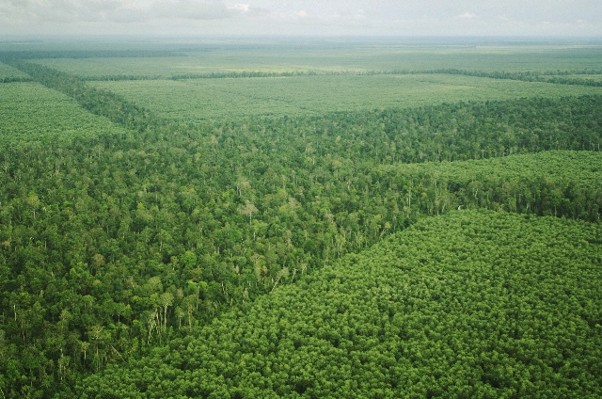
APRIL tracks fibre from plantation to production, ensuring traceability throughout the supply chain.
How does RGE scale productivity without expanding land?
Sustainability is not only about maintaining standards. It also means improving efficiency and productivity over time. As global demand for fibre-based packaging grows, the challenge is to increase output without expanding environmental impact.
APRIL has set a clear target to increase plantation productivity by 50% by 2030 from a baseline of around 20 tonnes per hectare each year to 30 tonnes. This reflects a strategic focus on producing more fibre from existing land, rather than expanding plantation areas.
Achieving this target takes research, technology, and operational discipline. APRIL’s research and development programmes focus on tree improvement, using techniques such as controlled pollination and clonal propagation to produce tens of millions of plantlets each year.
Precision forestry brings data to plantation management. Operations use data-driven monitoring systems and tools including:
- Drones
- Satellite imaging
- Digital mapping
These tools help optimise planting cycles, fertilisation, pest management, and harvesting schedules, ensuring that each stage of the plantation lifecycle is managed efficiently.
By improving productivity on existing land, enabling higher yield while maintaining soil health and biodiversity considerations, APRIL is able to align economic growth with environmental responsibility.
Can fibre-based packaging be safe and high performing?
With innovation in responsible forestry providing the foundation, product innovation builds on it, allowing fibre-based packaging to meet modern requirements.
Food-safe technology is one critical area. Packaging for food and beverage applications must meet strict safety standards, ensuring that it does not introduce harmful substances or compromise product integrity.
BoardOne products are designed to support direct and indirect food contact, complying with internationally recognised standards such as FDA requirements and FSSC 22000, a globally recognised food-safety management certification.
Material safety is further reinforced through testing and compliance measures. This includes OBA (optical brightening agent)-free formulations. These safeguards maintain hygiene and consumer confidence, particularly in food and healthcare applications.
Moisture resistance is another key area of innovation. Paper-based materials have traditionally struggled with wet or oily products. BoardOne solves this in two ways.
- Multi-layer fibre structures add stiffness
- Starch-based surface coatings resist moisture
Both treatments allow paperboard to maintain performance while being fully recyclable.
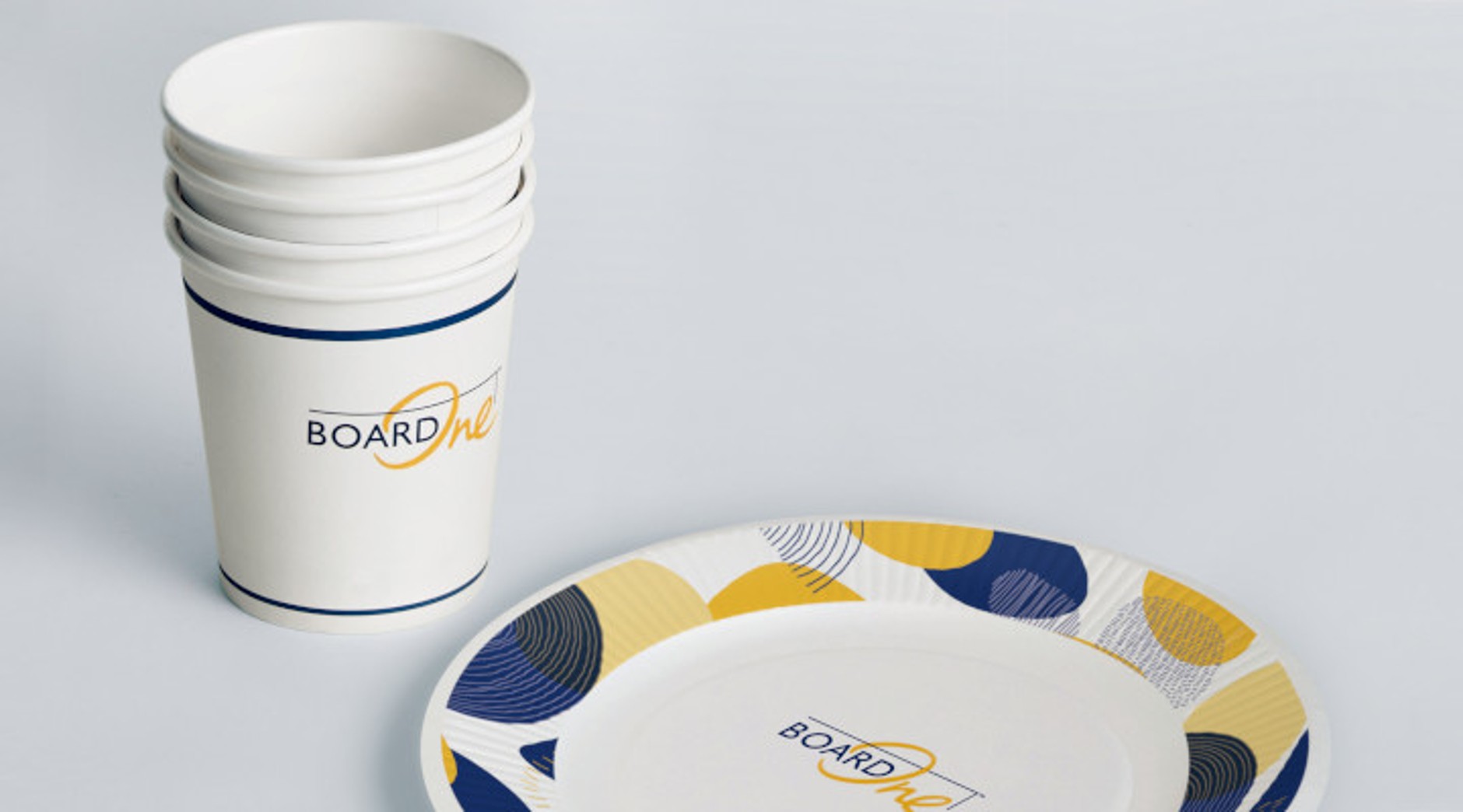
BoardOne’s cupstock and platestock are designed for direct contact with food.
How does RGE align innovation with long-term targets?
The development of sustainable packaging is not a one-off effort. It needs long-term commitment and continuous improvement across the value chain.
APRIL’s work is guided by the APRIL2030 framework, which sets measurable targets across climate, nature, and inclusive progress, with efforts including:
- Improving plantation productivity without expanding land use
- Enhancing manufacturing efficiency
- Advancing material innovation
This reflects a wider understanding at RGE: Rather than being treated as a separate function, sustainability is embedded into our core business strategy, shaping decisions from forestry to final product development.
The future of fibre-based packaging
Fibre-based packaging is part of a broader shift towards the bioeconomy, where renewable and recyclable materials replace non-biodegradable alternatives.
Paperboard is not just a plastic substitute. It represents a material that can be improved continuously though responsible sourcing and technological innovation. From plantation science to material engineering, every stage of the process contributes to a more sustainable outcome.
For RGE and APRIL, sustainable packaging is a long-term commitment. It connects forestry, science, and manufacturing into one system. Managed responsibly and engineered with precision, fibre will play a central role in the future of sustainable packaging.
Frequently asked questions
What is BoardOne? BoardOne is a fibre-based paperboard from APRIL, part of the RGE group. It is made from wood fibre grown in sustainably managed plantations.
Is BoardOne food-safe? Yes. BoardOne supports direct and indirect food contact. It complies with FDA requirements and FSSC 22000, and uses OBA-free formulations.
Is fibre-based paperboard recyclable? Yes. BoardOne uses multi-layer fibre structures and starch-based coatings that maintain recyclability.
What certification covers APRIL’s fibre? APRIL’s fibre sourcing is certified under PEFC, a globally recognised forest-certification standard.
How does BoardOne help reduce plastic? BoardOne replaces plastic with renewable wood fibre. It is engineered for packaging that often rely on plastic. This supports a shift towards more recyclable, fibre-based packaging.
How does fibre-based packaging support the bioeconomy? The bioeconomy replaces non-biodegradable materials with renewable, recyclable ones. Fibre-based paperboard is a core example. Responsible sourcing and innovation make it increasingly viable at scale.
Learn more about sustainable packaging at RGE and APRIL