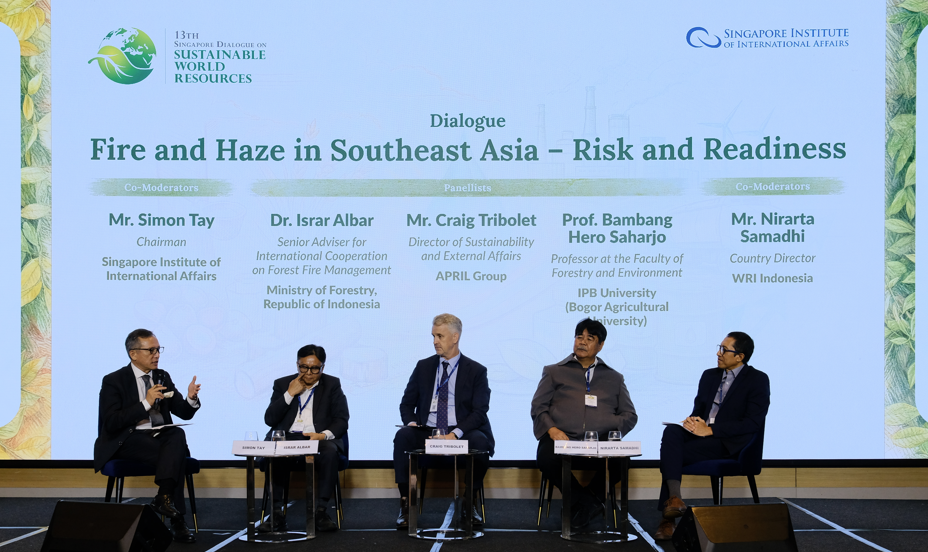
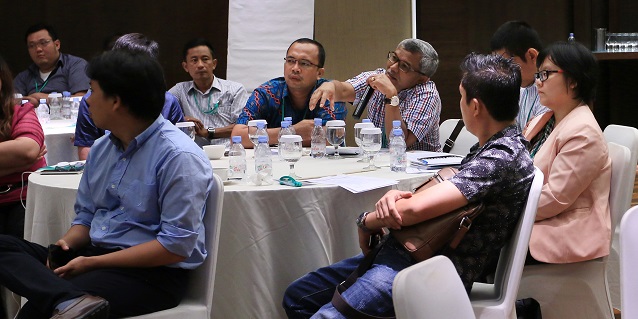
At the 13th Singapore Dialogue on Sustainable World Resources, the panel on “Fire and Haze in Southeast Asia – Risk and Readiness” brought together a diverse group of stakeholders to examine one of the region’s most persistent environmental challenges.
The session was moderated by Simon Tay, Chairman of the Singapore Institute of International Affairs (SIIA), and Nirarta Samadhi, Country Director of World Resources Institute (WRI) Indonesia. Speakers included Dr Israr Albar, Senior Adviser at Indonesia’s Ministry of Forestry, Bambang Hero Saharjo of IPB University, and Craig Tribolet, Director of Sustainability and External Affairs at APRIL.
Fire and haze continue to be a major problem and a major threat in the region, not only for companies managing large landscapes, but also for forests, communities and public health. A central theme was the need to fundamentally reframe how fire is understood.
“Indonesia is not a fire-prone environment…and yet we’re here talking about fires in a tropical environment,” said Craig. Indonesia actually receives approximately 2,500 millimetres of rainfall each year, more than four times that of parts of Australia and significantly higher than many temperate climates.
This points to a clear conclusion: fires in the region are not a natural phenomenon, but largely human-driven.
Understanding the Drivers, Not Assigning Culpability
The persistence of fire is closely tied to economic and practical realities. All around the world fire is used to clear vegetation and reduce waste quickly and at low cost. As Craig explained, “It’s very cheap to use fire and it’s incredibly effective.”
However, the discussion emphasised that the narrative must evolve. Blaming practitioners oversimplifies a complex issue. Instead, there is a need to focus on root causes such as cost pressures, land-use practices and seasonal conditions. As Craig noted, the priority is “analysing the data, understanding core risks” rather than assigning fault.
At the same time, the human impact remains under-recognised. “People who live closest to the source of the smoke are the most impacted,” Craig highlighted, pointing to the disproportionate effects on vulnerable groups such as children, pregnant women and those with pre-existing health conditions.
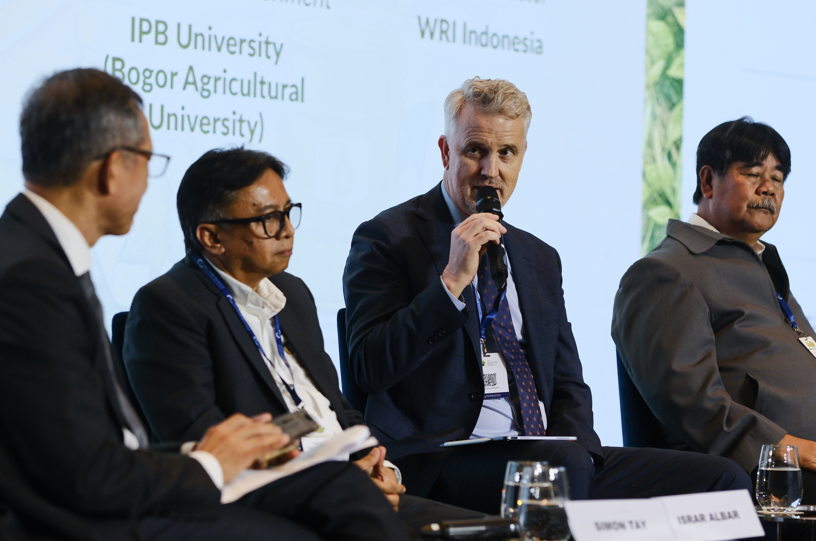
Craig Tribolet, Director of Sustainability and External Affairs at APRIL, speaking at the Singapore Institute of International Affairs’ Dialogue on Sustainable World Resources.
Accountability, Investment and Collaboration
Accountability has become a defining feature of fire management in Indonesia. “It doesn’t matter where the fire starts or how it’s caused…once it crosses into our concession, we are responsible for it,” Craig said.
This has driven stronger operational discipline, particularly following the regulatory reforms introduced after the 2015 haze crisis. Companies are now required to meet minimum standards, maintain equipment and undergo regular audits. In parallel, APRIL has implemented a strict no-burn policy across its entire supply chain, reinforcing its approach to responsible land management.
Long-term investment is equally critical. Fire management cannot be reactive or dependent on climate cycles. “Fire management doesn’t respond to climatic signals…it’s about long-term investments,” Craig emphasised, highlighting the need for sustained capability in prevention, monitoring, response and recovery year on year.
One of the most effective strategies has been community engagement. By working closely with local communities, companies have achieved significant reductions in fire incidence. As Craig shared, “It has been by far the best investment we’ve ever made in fire management,” with programmes reducing burning by 90% over the past decade.
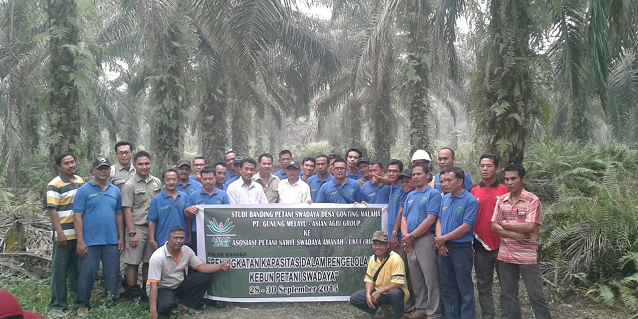
A central pillar is the Fire Free Village Programme, which works directly with local communities to discourage the use of fire through incentives, education and alternative land-clearing methods. This programme has been instrumental in reducing fire risk at the landscape level by aligning community practices with sustainable land management.
In parallel, APRIL invests heavily in early detection and monitoring capabilities. This includes ground patrols and real-time surveillance systems that enable rapid identification of fire risks. By integrating weather data and field observations, the company is able to take a proactive approach to fire prevention rather than relying on reactive measures. When fires do occur, dedicated fire suppression teams equipped with specialised machinery and trained personnel are deployed. These teams operate alongside community fire crews, reinforcing a coordinated response model that combines professional capability with local knowledge. This end-to-end approach – spanning prevention, preparedness, detection and suppression – reflects the level of sustained investment required to manage fire risk effectively over time.
Finally, collaboration across the ecosystem remains essential. Partnerships such as the Fire Free Alliance highlight the importance of bringing together companies, NGOs, and a broader range of stakeholders. Involving participants beyond large organisations helps introduce diverse perspectives and encourages more innovative, well-rounded approaches to addressing fire management challenges.
The discussion underscored a clear reality. Fire and haze in Southeast Asia are not inevitable, but they are complex. Addressing them requires a shift in mindset, from blame to understanding, from reaction to readiness, and from short-term fixes to sustained, collective action.
While attending the World Economic Forum (WEF) annual meeting in Davos, Switzerland, last month, Anderson Tanoto, Managing Director, RGE, spoke to Indonesian TV Station Berita Satu to share his perspectives...
Apical, one of the largest exporters of palm oil in Indonesia, continued its long-standing commitment towards creating sustainable and traceable palm oil supply lines when it recently hosted the Apical Shared...
Asian Agri’s longstanding partnership with palm oil smallholders has often been seen as a successful case study of governance in the regional palm oil industry. With an annual production capacity...