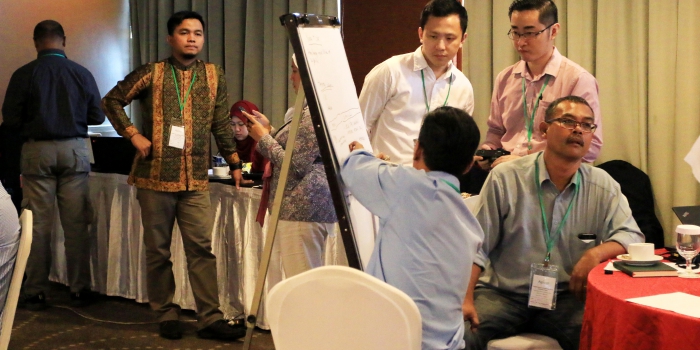
Indonesian batik is one of the world’s most treasured textile crafts. Yet the artisans who make it often face a challenge: how to raise the quality, efficiency and commercial value of batik without eroding a centuries-old tradition. Asia Pacific Rayon (APR), part of the Royal Golden Eagle (RGE) group of companies, has introduced lyocell to Indonesia’s batik sector as a premium, high-performance fabric built for exactly this balance.
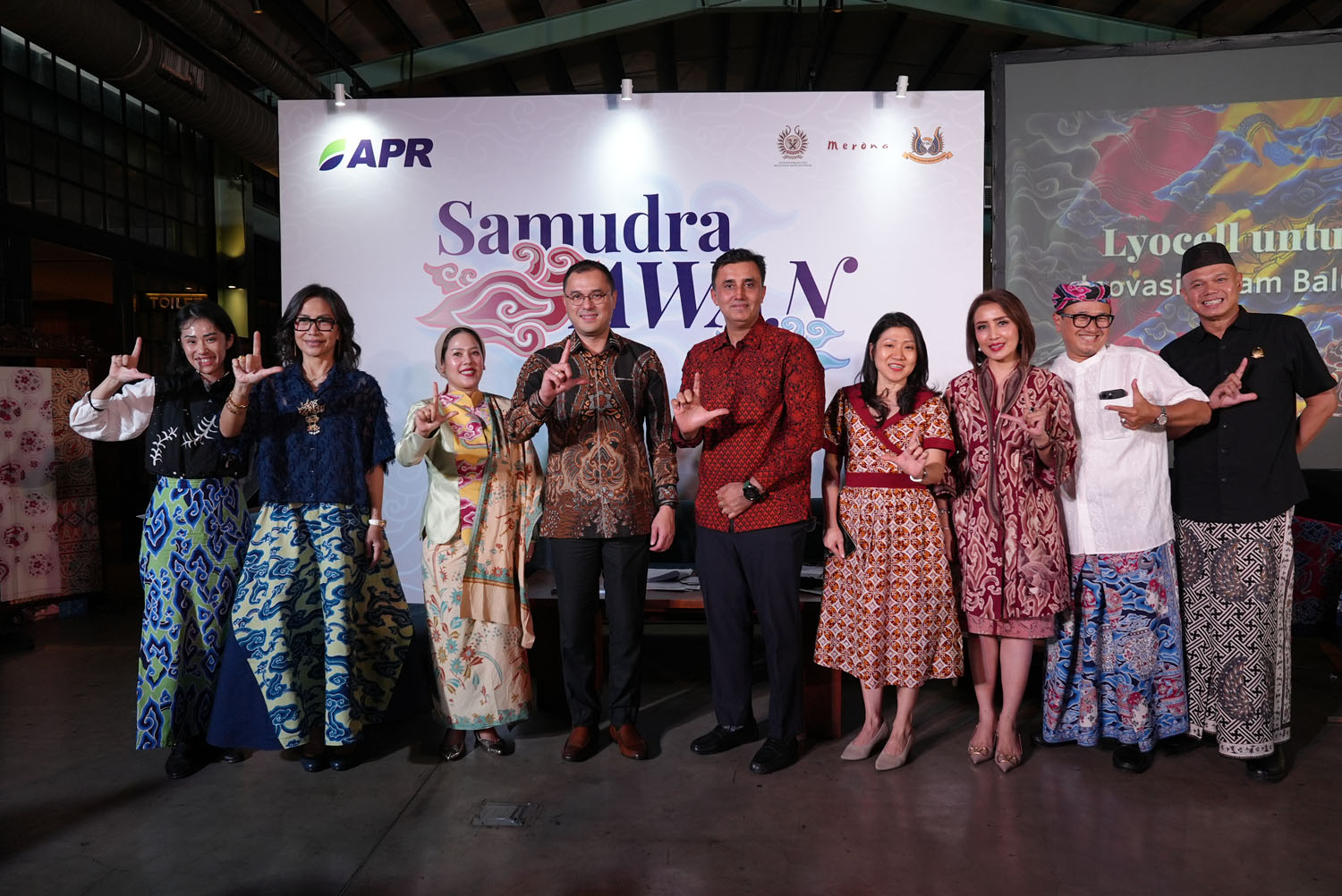
Lyocell is a cellulosic fibre made from renewable wood pulp and produced in a closed-loop process. APR launched the initiative at the “Samudra Awan” event in Jakarta. The event introduced lyocell as an alternative medium to traditional batik fabrics. The goal is simple: improve both the technical output and the market value of batik while preserving the craftsmanship that defines it.
What is lyocell, and why does it matter for batik?
Lyocell is a cellulosic fibre valued for softness, strength and absorbency, and it sits in a fast-growing global market. Asia Pacific is both the largest and the fastest-growing region for the fibre.
For batik, the fabric is not just a backdrop. The quality of a finished piece depends heavily on how the cloth interacts with wax and dye. That makes fibre selection a critical production decision, and this is where lyocell offers a clear technical advantage.
Supporting a living cultural heritage
Renowned for its intricate wax-resist dyeing process, UNESCO recognised Indonesian batik on the list of Intangible Cultural Heritages of Humanity in 2009. Artisans draw or stamp hot wax onto cloth, dye the fabric, then remove the wax to reveal the pattern.
There are two core techniques, batik tulis, patterns drawn by hand, one line at a time, and batik cap, patterns applied with a copper stamp for faster, repeatable output.
At the Jakarta event, APR showed how lyocell can complement traditional methods without compromising their authenticity. The showcase featured Cirebon’s iconic Megamendung motif, produced with the traditional Waleran colouring technique. It demonstrated how advanced fibre innovation can work alongside generations of artisanal knowledge.
How lyocell improves batik production
As a cellulosic fibre, lyocell brings several properties that suit batik especially well:
- High moisture absorption – dye penetrates more effectively, producing sharper motifs, richer colours and better colour fastness.
- Excellent wax adhesion – wax holds cleanly, giving artisans greater precision.
- Strength – the fibre withstands repeated waxing, dyeing and boiling, improving efficiency.
- Softness, breathability and natural cooling – ideal for premium, comfortable apparel in warm climates.
Komarudin Kudiya, Founder of Rumah Batik Komar, highlighted these advantages during the event.
“Lyocell significantly improves the production cycle. It absorbs dye rapidly and requires less volume to achieve a vibrant, high-lustre finish. The fibre’s strength and excellent wax adhesion allow our artisans to work more efficiently.”
The comfort factor matters commercially, too. Consumer demand is rising for premium, breathable textiles suited to warmer climates, and lyocell answers that demand directly.
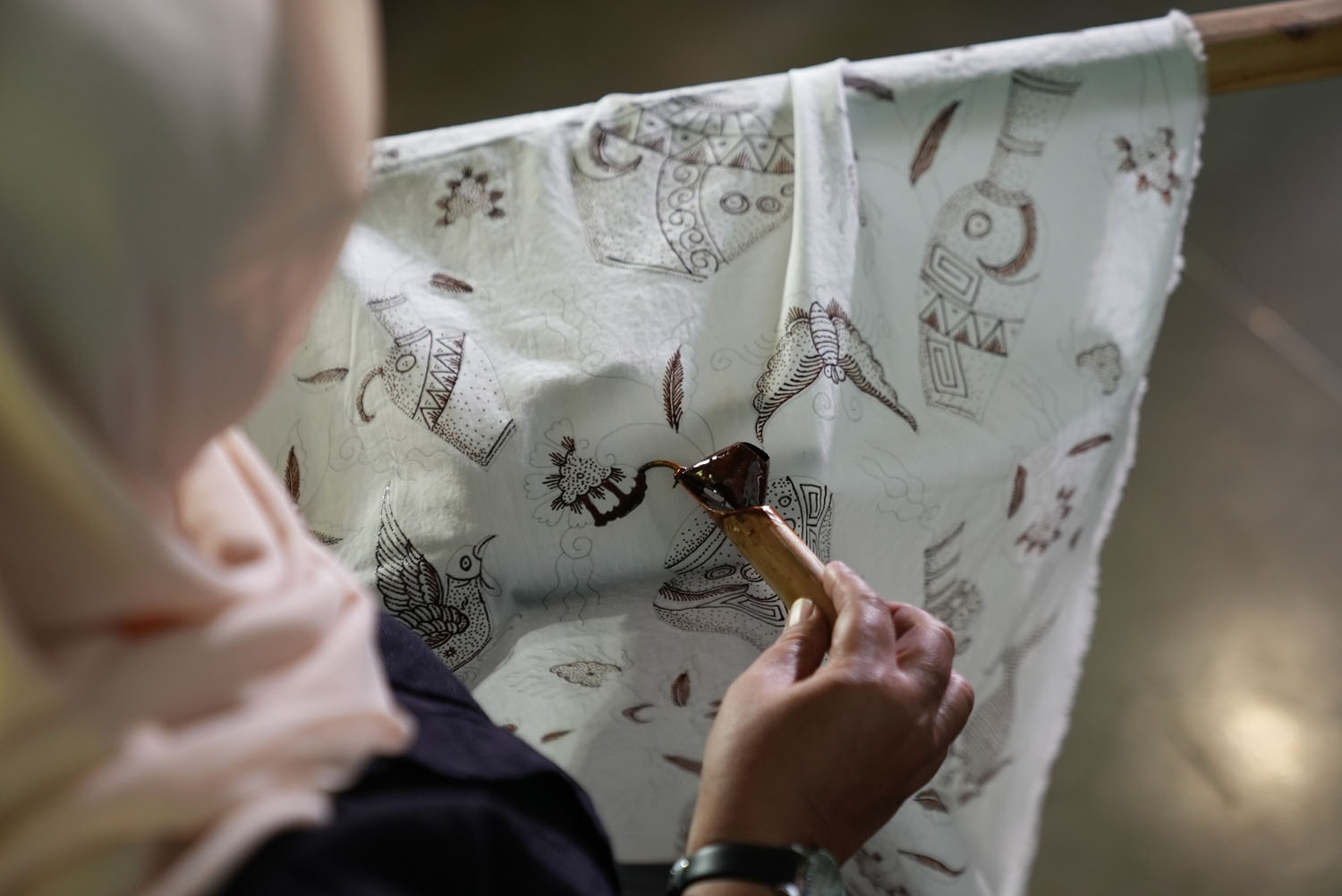
High moisture absorption, strength, and breathability make lyocell ideal for batik production.
Protecting Intellectual Property and Market Growth
The event brought together representatives from across Indonesia’s batik ecosystem, including the Association of Indonesian Batik Craftsmen and Entrepreneurs (APPBI), the Association of Cirebon Batik Craftsmen and Entrepreneurs, the Indonesian Batik Foundation (YBI), and the Ministry of Law’s Directorate of Trademark and Geographical Indications.
A key milestone was the symbolic handover of the Geographical Indication (GI) certificate for batik tulis waleran. A Geographical Indication is a legal recognition that ties a product’s identity to its place of origin and its traditional method of production. For Cirebon’s artisans, the GI protects their distinctive techniques from imitation and strengthens the region’s position in premium markets.
Sachin Malik, Head of Commercial at APR, said the introduction of lyocell reflects the company’s commitment to giving batik artisans materials that raise both craftsmanship and market opportunity.
“We want to provide the batik ecosystem with fabric alternatives that can capture fine detail with precision while maintaining the soft texture and beautiful drape required for premium apparel.”
How APR and RGE support sustainable growth
As part of RGE, APR and The Lyocell Company develop fibre solutions that strengthen local industries and support more sustainable value chains. The approach connects advanced material innovation with Indonesia’s rich textile heritage.
For batik, that means three practical outcomes:
- New opportunities for artisans to move into premium, higher-value products.
- Stronger domestic supply chains through locally produced fibre.
- Greater global competitiveness for Indonesian batik in the growing sustainable fashion market.
By pairing a heritage craft with modern fibre technology, APR aims to help batik grow without losing what makes it distinctive.
Frequently asked questions
What is lyocell? Lyocell is a cellulosic fibre made from renewable wood pulp and produced in a closed-loop process. It is known for softness, strength and high absorbency, and it is used across apparel, home textiles and healthcare products.
Is lyocell suitable for batik? Yes. Lyocell’s high moisture absorption improves dye penetration, its wax adhesion supports precise motifs, and its strength stands up to repeated waxing and dyeing.
Why did APR introduce lyocell to the batik sector? APR introduced lyocell to give artisans a premium fabric that improves technical quality and commercial value while preserving traditional craftsmanship. It was launched at the “Samudra Awan” event in Jakarta.
Why should brands collaborate with The Lyocell Company? APR is the international commercial and technical partner for lyocell under The Lyocell Company by Sateri. Lyocell from The Lyocell Company is a high-performance, eco-friendly fibre that delivers a strong foundation for innovative products across a wide range of textile and hygiene products.
Discover how APR is bringing sustainable lyocell to Indonesia’s batik makers on the APR website. To see how RGE and its businesses drive innovation, support local communities and advance more sustainable solutions across the global textile value chain, visit www.rgei.com.